Inside a Sydney Print Farm: How We Handle Rush Jobs
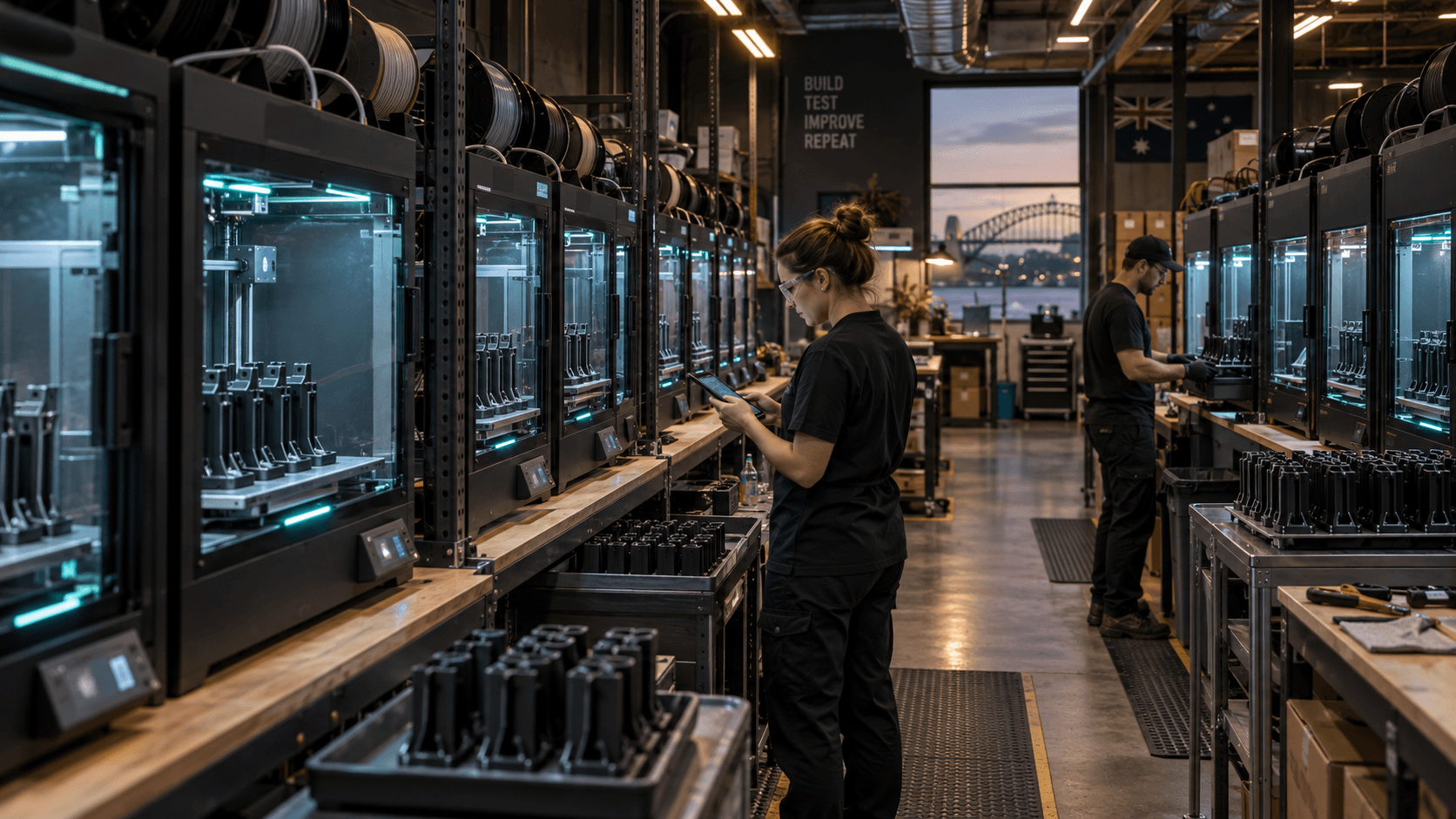
"Farm" is the right word, and the scale is the whole point. One printer is a handy tool. A coordinated fleet of them running non-stop is a different animal — a production capability that changes what you can promise on volume and turnaround.
What a print farm actually is
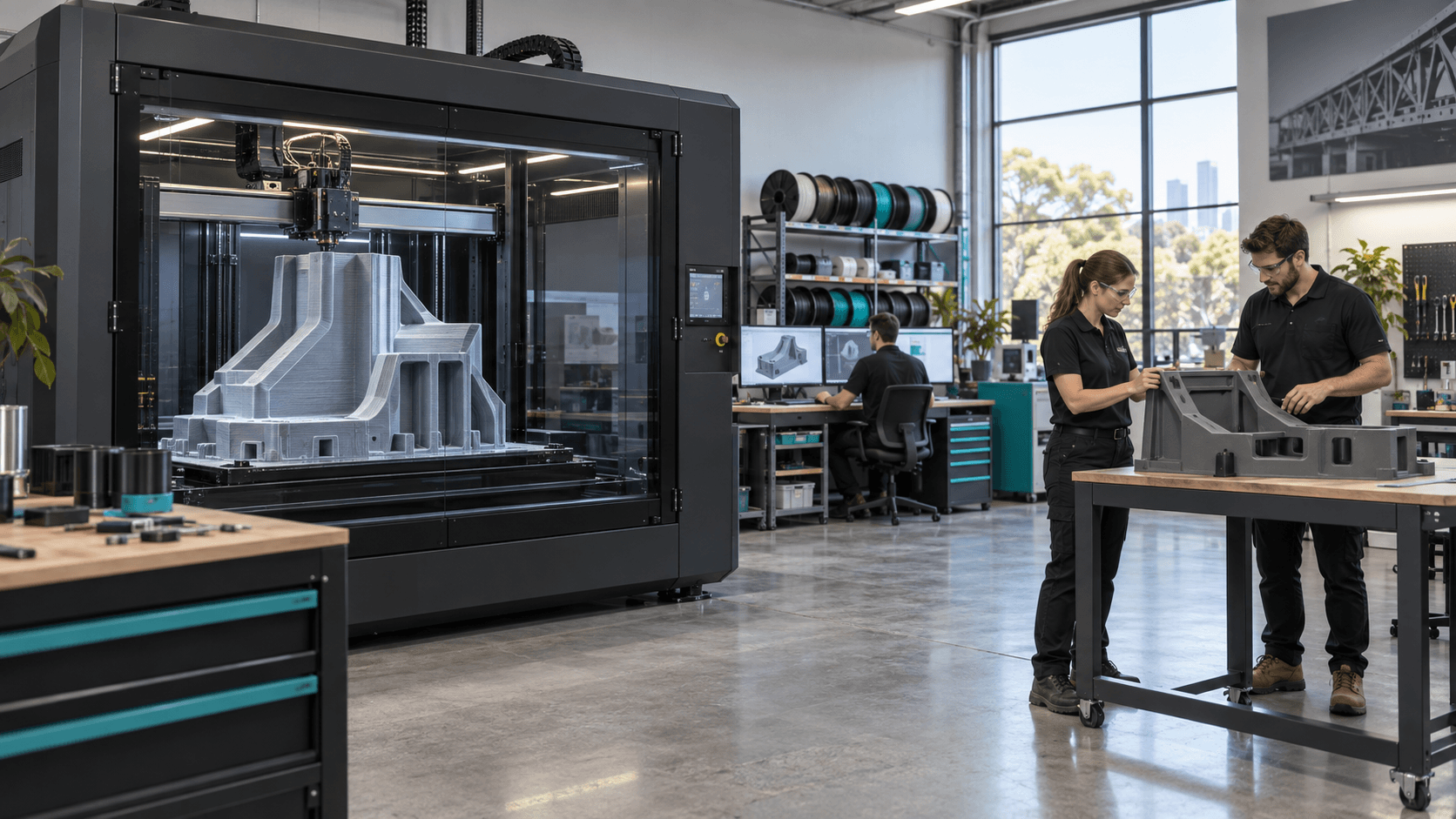
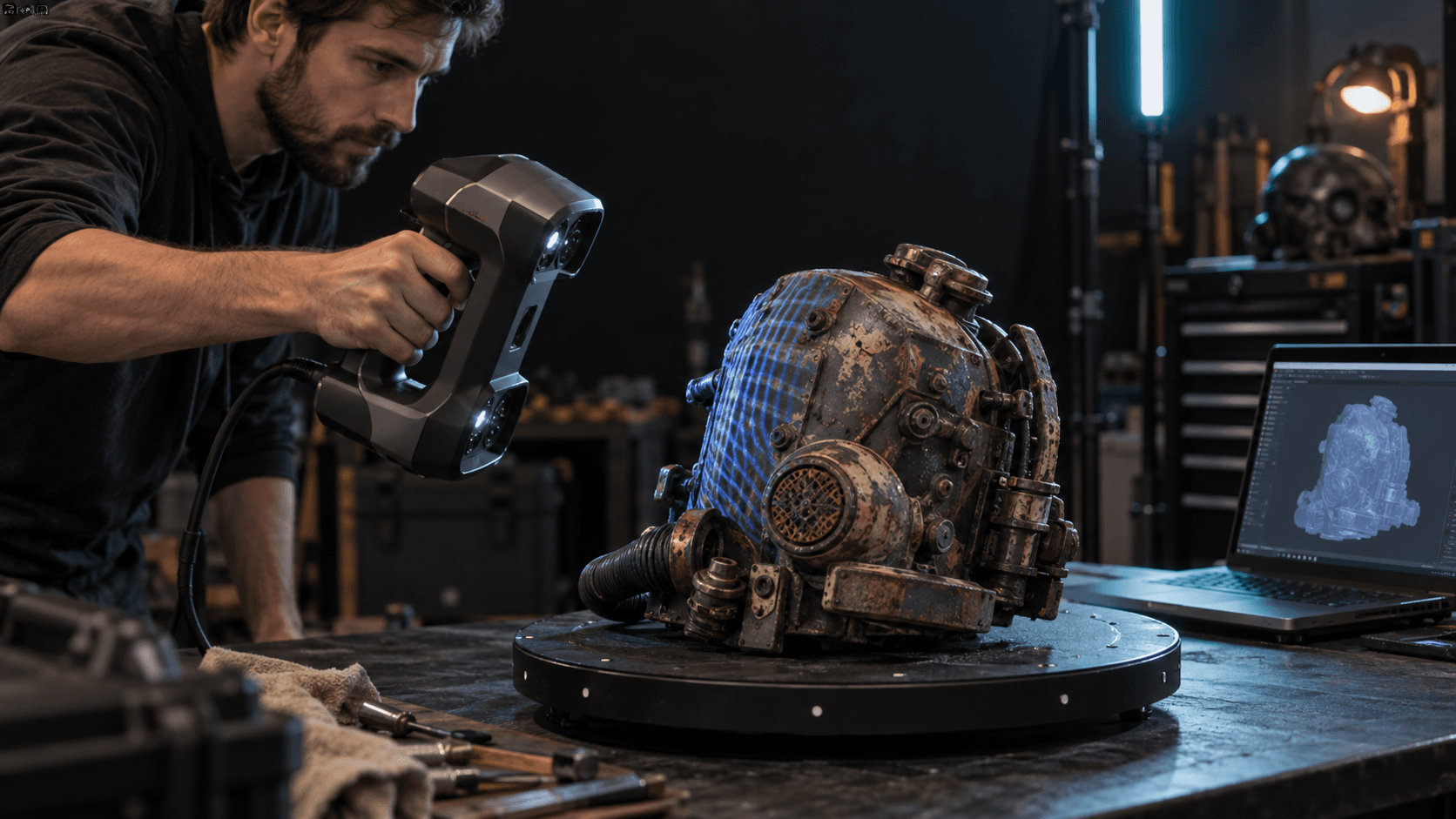
We run ours out of Riverstone, in north-west Sydney. At the heart of it is a fleet of FDM machines going around the clock, backed by resin printers for the fine-detail jobs and professional scanning gear for capture and reverse-engineering work.
It isn't just printers sitting in a room, though. There's job scheduling, material handling, quality checkpoints and post-processing all moving in sequence. For straightforward parts, something that lands in the morning can be printed, cleaned up and ready to collect or ship by the end of the day.
How a rush job really goes
"Rush" means different things depending on who's calling. For a production it might be 48 hours for a full set of hero props. For an engineering client it might mean parts by Friday that their usual supplier quotes at three weeks.
The honest version of "how fast can you go?" is: depends what it is, and whether there's a machine free. The whole advantage of a fleet is that we're not waiting on one printer to clear before yours can start. When we've got capacity — and we watch that closely — your job joins the queue straight away.
For film and TV, we keep a standing rule: genuine deadline jobs jump the line. Tell us there's a 6am call and the parts have to be on set, and that shapes the schedule then and there.
Quality when the clock's running
The danger with rush work is letting speed become an excuse. So our checks don't flex with the deadline. Every part gets looked at against the original file before it leaves — dimensions for functional parts, a proper visual once-over for cosmetic ones, fit checks for anything that has to mate with something else.
Post-processing happens here too: supports off, surfaces finished, primer where it's needed. If a part's meant to go straight to the paint shop, it leaves our bench ready for it.
What we run
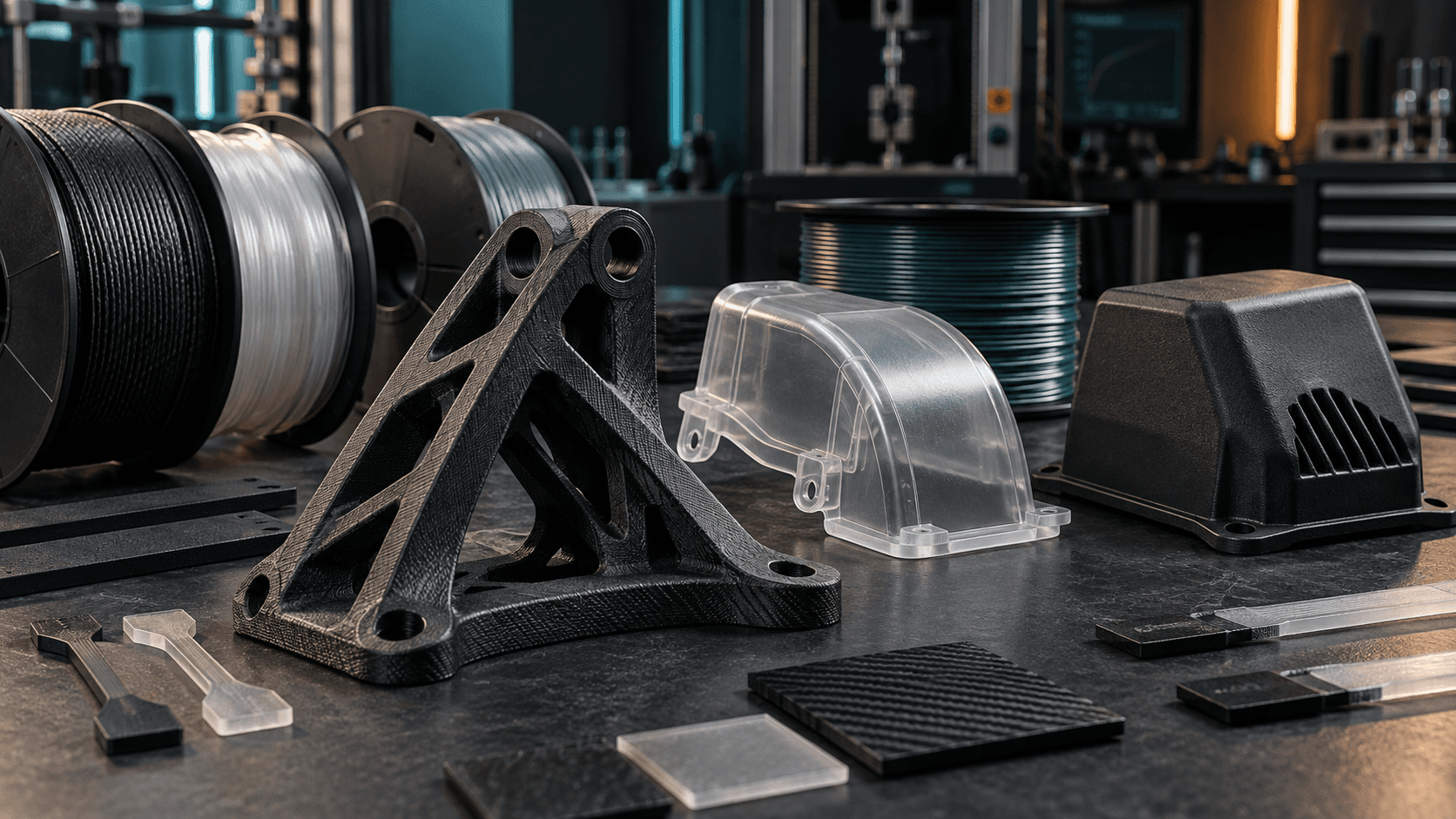
Most of our FDM volume is PLA, PETG and ABS — the bread and butter of functional printing. When a job needs more, we move to the engineering grades: Nylon (PA12 and PA6), the carbon-fibre reinforced versions, ASA for anything living in the sun, and TPU where it needs to flex. On the resin side we cover standard, engineering and flexible depending on the part.
Everything running through the farm is material we've qualified ourselves — the same stock we sell through our supply arm. So when a client asks what we used on a part that worked well for them, we can name it exactly, and they can buy it direct.
Getting started
Quickest way to get moving is to send files and a short brief. STL or STEP are ideal. Tell us what the part does, any material preference, and your deadline. For most jobs we'll come back with a quote and a realistic timeline inside a few hours.
For regulars with steady volume, we can set up standing arrangements and skip the quoting altogether.
Need 3D Printing Services?
Get in touch for a free consultation and quote on your project.
Request a Quote