The Rise of In-House 3D Print Labs in Australian Industry
For the first few years of this generation of industrial printing, outsourcing was just how it was done. If you needed printed parts, you sent files to a bureau and waited for the box to turn up. It worked well enough, but the limits were obvious: lead times, back-and-forth, and no way to turn a change around yourself.
That's shifting. More Australian businesses — manufacturers, product developers, film and TV studios, universities, defence contractors — are weighing up whether to bring printing in-house. Some are nailing it. Plenty are underestimating what it takes.
When in-house adds up
The sums start working once your volume is high enough and your use case is steady enough. A product team running several design iterations a week will, over a year, spend more on outsourcing than a well-specified in-house setup costs to buy outright.
Speed is the other half of it. Printing a revised prototype the same day — which in-house makes possible — instead of waiting two days on a supplier genuinely changes how a team works. They iterate more, catch problems sooner, and keep moving.
For production companies with steady work, owning the capability also means owning the schedule and the confidentiality. A studio with its own printers never has to send a sensitive design outside the building.
What in-house doesn't mean
Bringing printing in-house doesn't mean firing your suppliers. Even outfits with serious internal capability keep external partners around for overflow, specialist materials, large-format work, and the finishing jobs that aren't worth setting up themselves.
For most people the right shape is tiered: handle the routine work and the fast iteration yourself, and lean on outside partners for the hard, the high-volume and the specialist.
What it actually takes
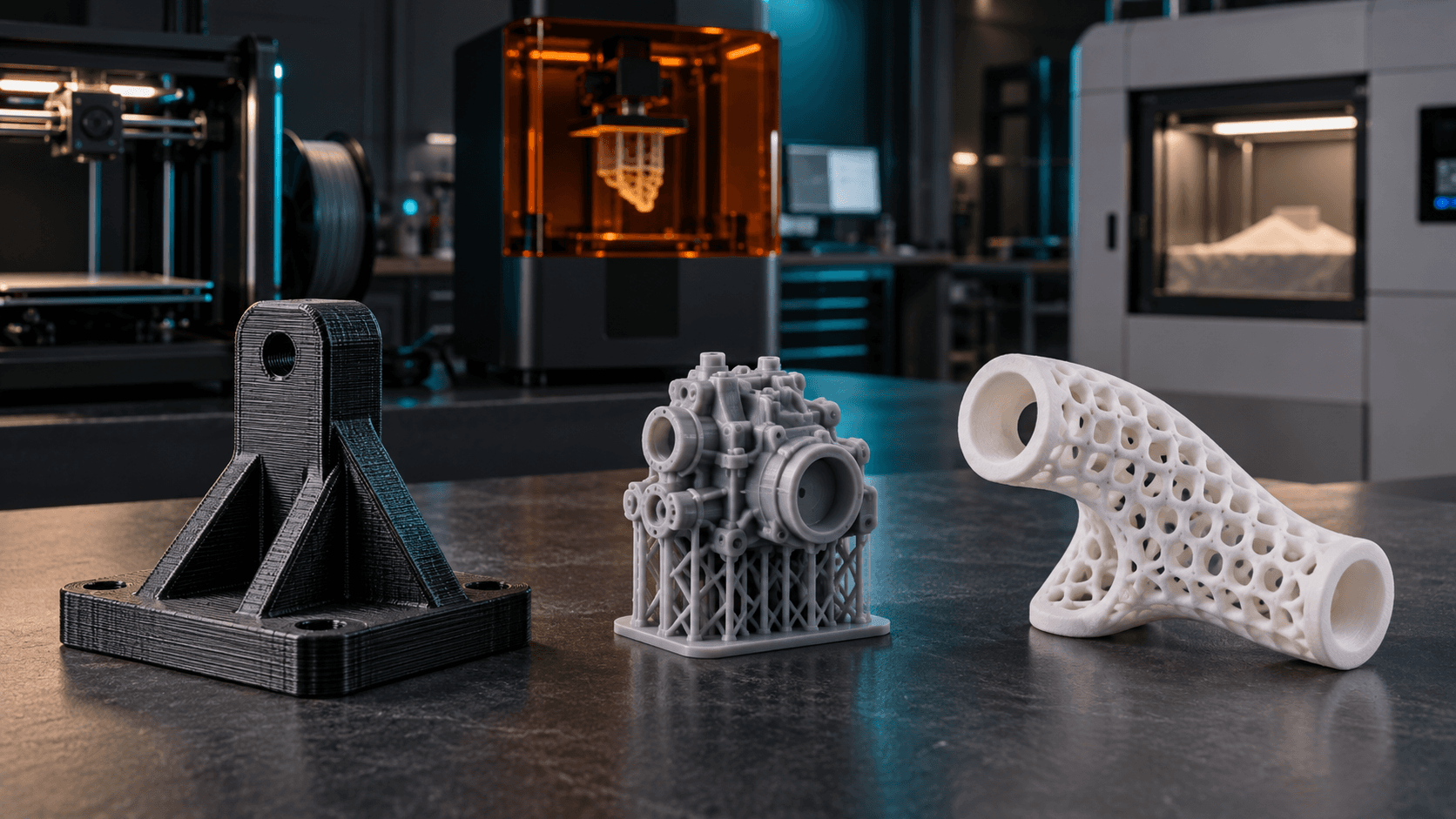
The printers are the easy part. Hardware's come right down in price — a capable industrial FDM machine costs a fraction of what it did five years ago. It's the less obvious costs that catch people out:
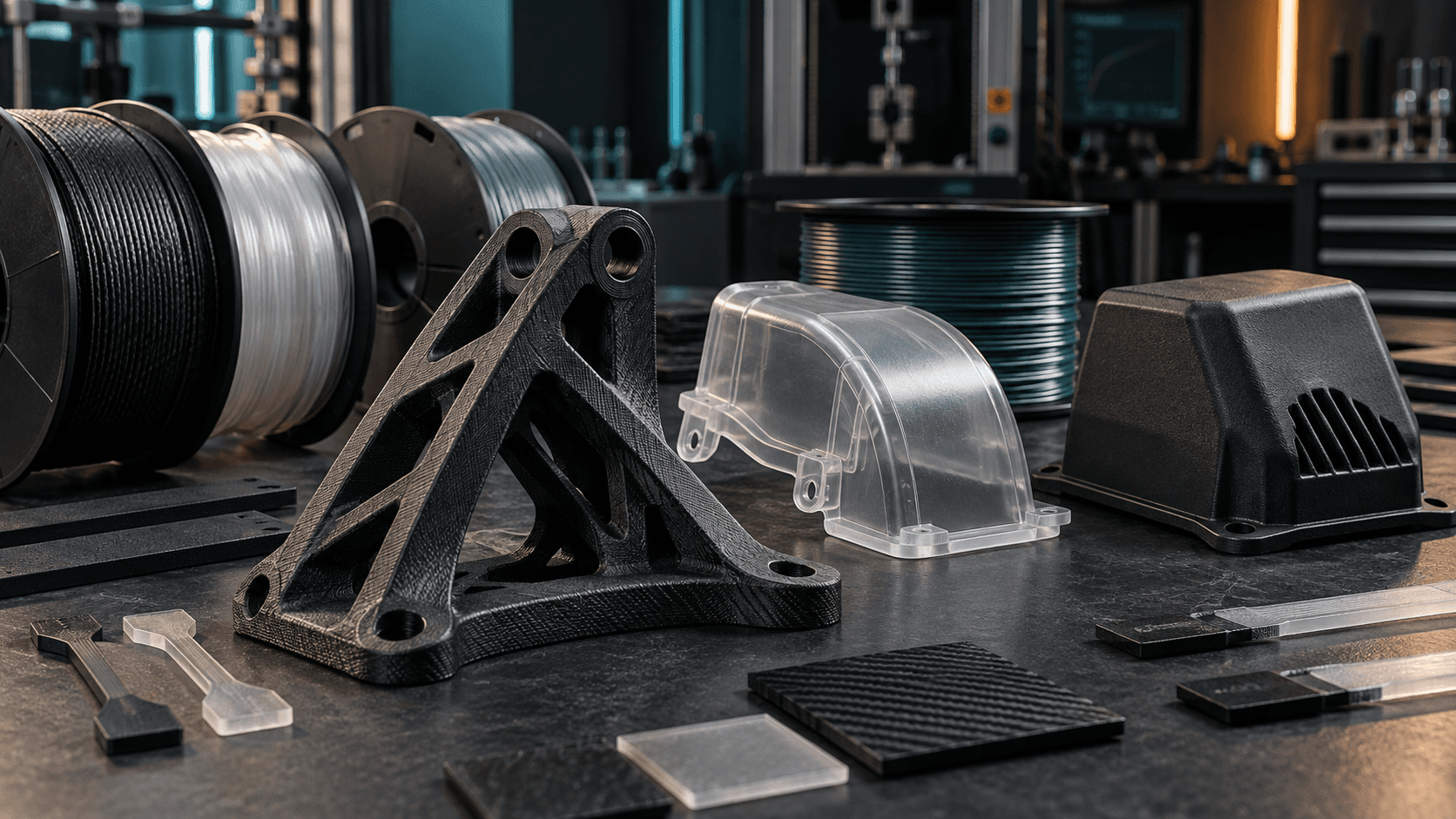
Material management. Engineering filaments hate moisture. Storage, drying routines and stock control matter more than most new operators expect, right up until a tray of failed prints from damp filament teaches the lesson.
Operator know-how. Consumer printing is getting close to plug-and-play. Industrial printing for functional parts isn't. Dialling in profiles for a new material, chasing down warping and adhesion, keeping the machines healthy — that takes trained people, or a support line to someone who's already been through it.
Post-processing. Most printed parts that earn their keep need finishing — supports off, surfaces tidied, sometimes paint or coating. That wants space, gear and skilled hands.
File prep. A CAD model out of engineering software has to be converted, oriented, supported and sliced before it ever prints. Someone has to own that step.
How we help
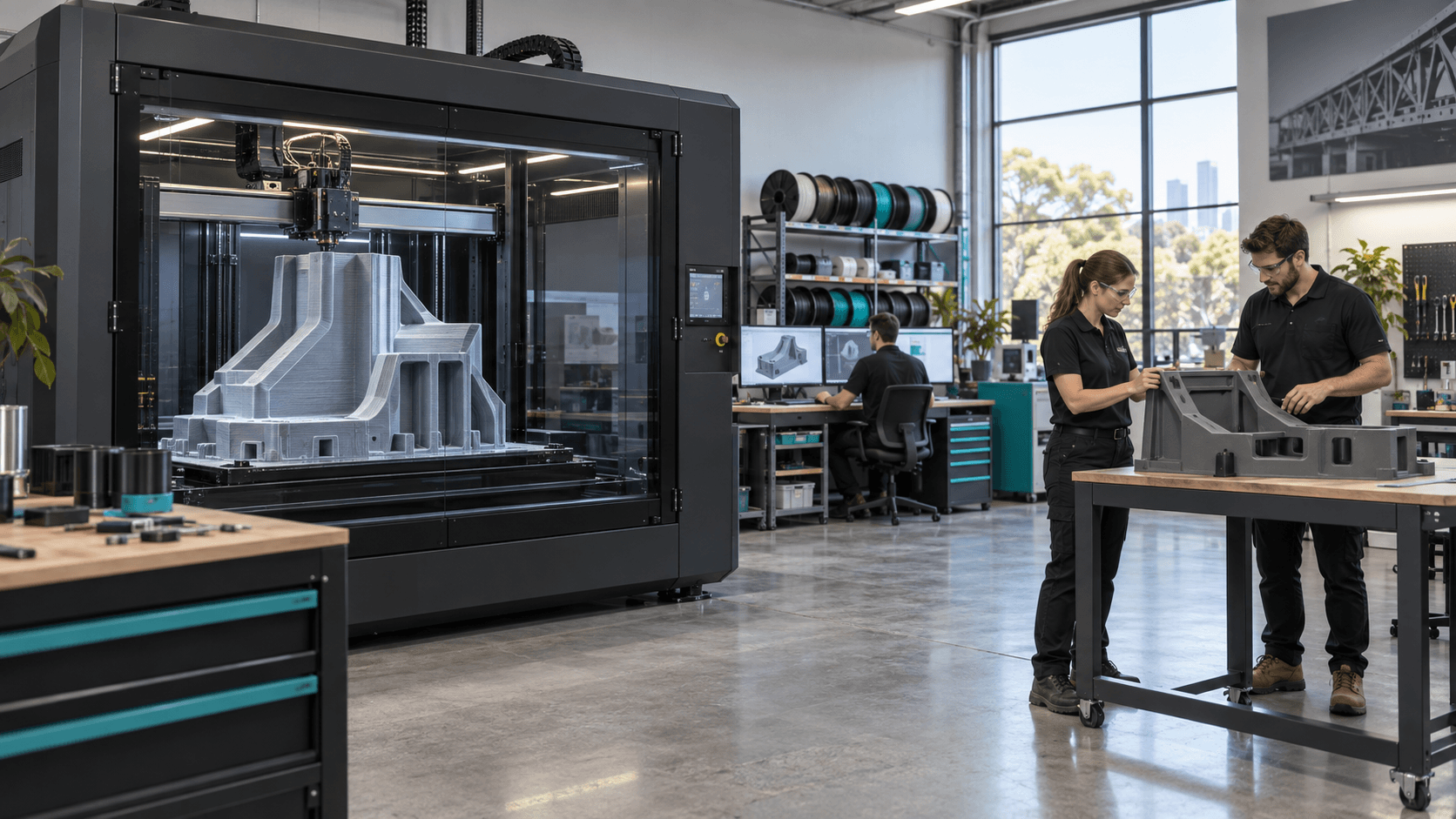
P3DA designs, builds and supports in-house print labs for organisations ready to commit. We look hard at the use case, spec the right equipment, handle install and commissioning, train the operators, and stay on for ongoing support.
And for the businesses that aren't ready to go all-in but want more control than straight outsourcing gives them, we run overflow and surge arrangements — basically an extra set of machines on call when demand spikes.
If you're trying to work out whether a lab makes sense for you, the best place to start is an honest look at your volume, your use cases, and whether you've got the capacity to keep it running. Happy to talk it through, no obligation.
Need 3D Printing Services?
Get in touch for a free consultation and quote on your project.
Request a Quote