FDM, Resin, or SLS: Choosing the Right Technology for Your Project
Picking the wrong process for a part is one of the most common ways a print job goes sideways, and one of the easiest to avoid. The right call comes down to four things: what the part has to do, how it has to look, how big it is, and what you're willing to spend.
FDM: the workhorse
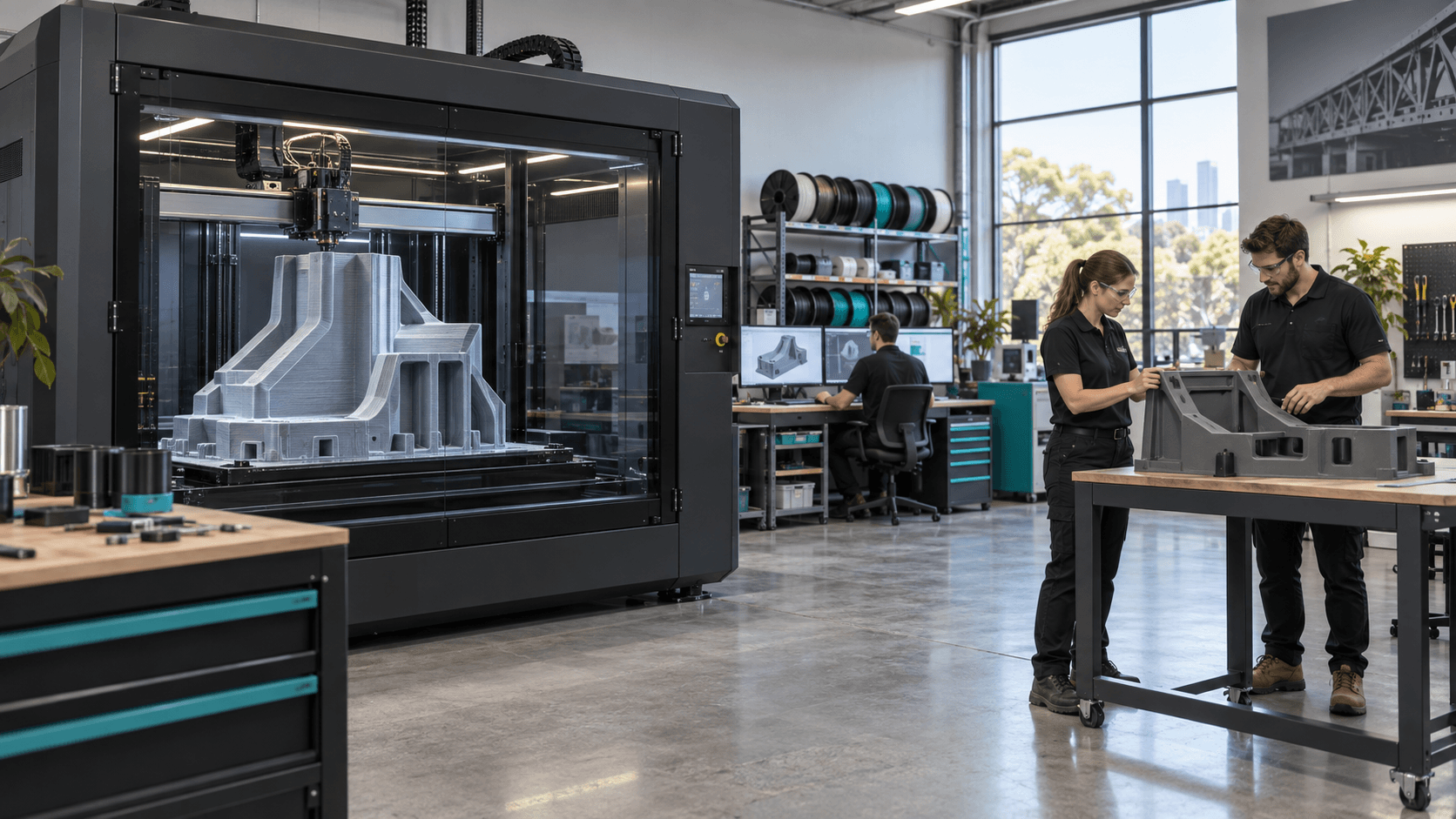
Fused deposition modelling is the one most people picture when they think 3D printing, and it's popular for good reason. It handles large parts, runs in a huge range of engineering materials, keeps costs down, and moves quickly.
Reach for it when you're making functional prototypes, jigs and fixtures, big structural parts, production tooling, or anything that needs a real engineering material:
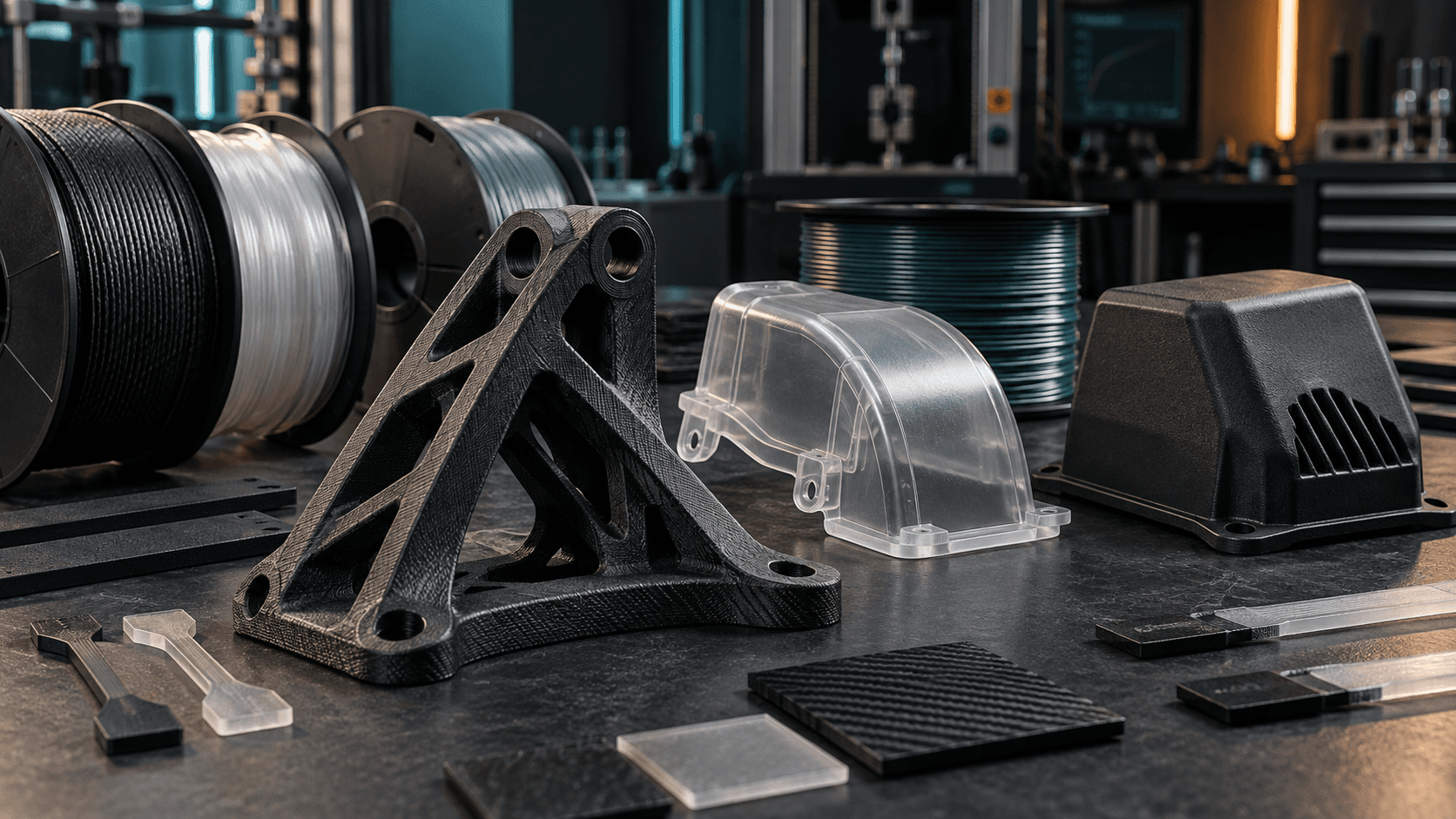
- Nylon, ABS and PETG for general functional work
- Carbon-fibre composites for stiffness
- ASA for outdoor and UV exposure
- TPU where the part has to flex
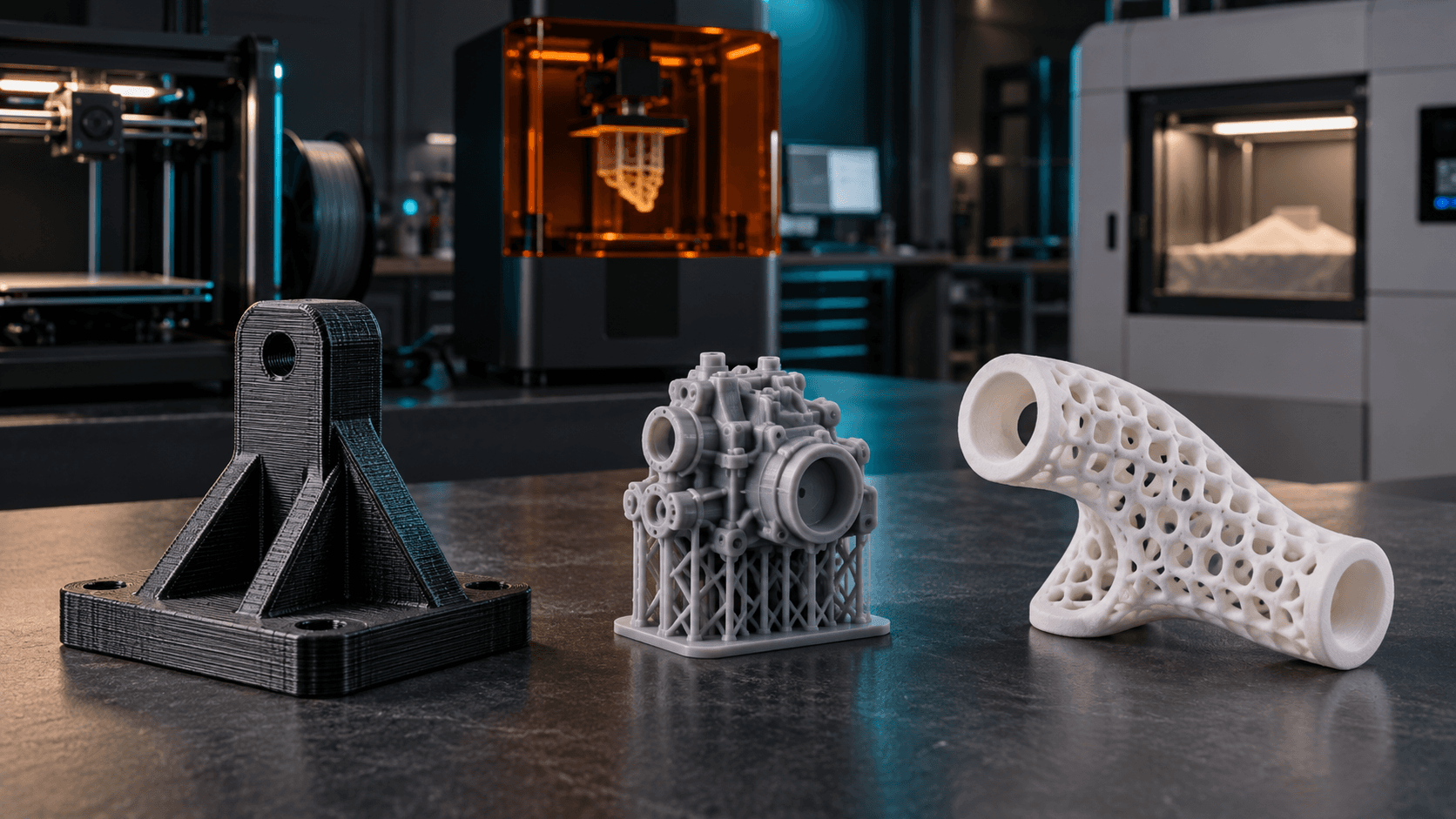
Where it falls down: you'll see layer lines at normal layer heights, fine detail under about 0.4mm gets unreliable, and it's not the tool for parts that live or die on looks. Day to day we print at 0.1–0.3mm, dropping to 0.05mm when a part needs a fine-detail pass.
Resin (SLA/MSLA): the detail option
Resin — laser-based SLA or LCD-based MSLA — leaves FDM behind on surface detail. Layer heights of 0.05mm are routine, and the resolution picks up features an FDM nozzle simply can't.
It's the right pick for hero props and display models that need crisp surfaces, dental and medical models, jewellery masters, small intricate parts — anything where finish is the whole point.
The trade-offs: a smaller build area than large-format FDM, parts that can be brittle depending on the resin (engineering and tough resins fix most of that), and a wash-and-cure step that adds time. Material-wise you've got standard for visual models, tough or engineering for functional parts, flexible for gaskets and soft-touch components, and castable for jewellery and lost-wax patterns.
SLS: geometry and material properties
Selective laser sintering fuses powdered Nylon with a laser. There are no support structures — the surrounding powder holds everything up while it prints — so complex internals and interlocking assemblies can come out in a single piece.
It shines on geometry that would drown in supports on FDM, on functional Nylon parts that need to perform the same in every direction, on small-to-medium runs, and on living hinges and snap-fits.
The catch is the finish: it comes out granular, a bit like fine sandpaper. Tumbling and dyeing improve it but won't make it glossy. Setup also costs more than FDM, so SLS rarely makes sense for a single part.
Making the call
For most prop work, it's resin for anything seen up close and FDM for the structural pieces and stunt duplicates. For most engineering work, it's FDM in the right material for functional parts and resin for high-detail visual prototypes. And when a functional assembly is all about the geometry, that's where SLS earns its place.
If you're stuck, send the file and tell us what it has to do. Working out the right process is part of the quote — no obligation, and the advice comes free.
Need 3D Printing Services?
Get in touch for a free consultation and quote on your project.
Request a Quote