How 3D Printing is Changing Australian Film & TV Production
Australian film and TV has turned into one of the most punishing environments for physical fabrication you'll find anywhere. Schedules get squeezed, design notes land late, and once you're on set there's no room to get it wrong. A lot of how prop and SFX teams keep their heads above water now comes down to 3D printing.
Where traditional prop-making struggles
None of this is a knock on traditional fabrication. Foam carving, fibreglass layup, vacuum forming — these are real crafts, and there's work they'll always do better than a printer. The trouble is speed and repeatability. None of those processes are quick, and none of them hand you an identical copy on demand. Damage a hero prop the night before a shoot and you're looking at days, sometimes weeks, to remake it. Get a design change at the script revision stage and a chunk of that bench time goes in the bin.
A printer changes the maths. Once a file's signed off, a reprint is a matter of hours. Changes happen in the software instead of on the bench. And because the part is defined digitally, copy number fifty is the same as copy number one.
What productions actually print
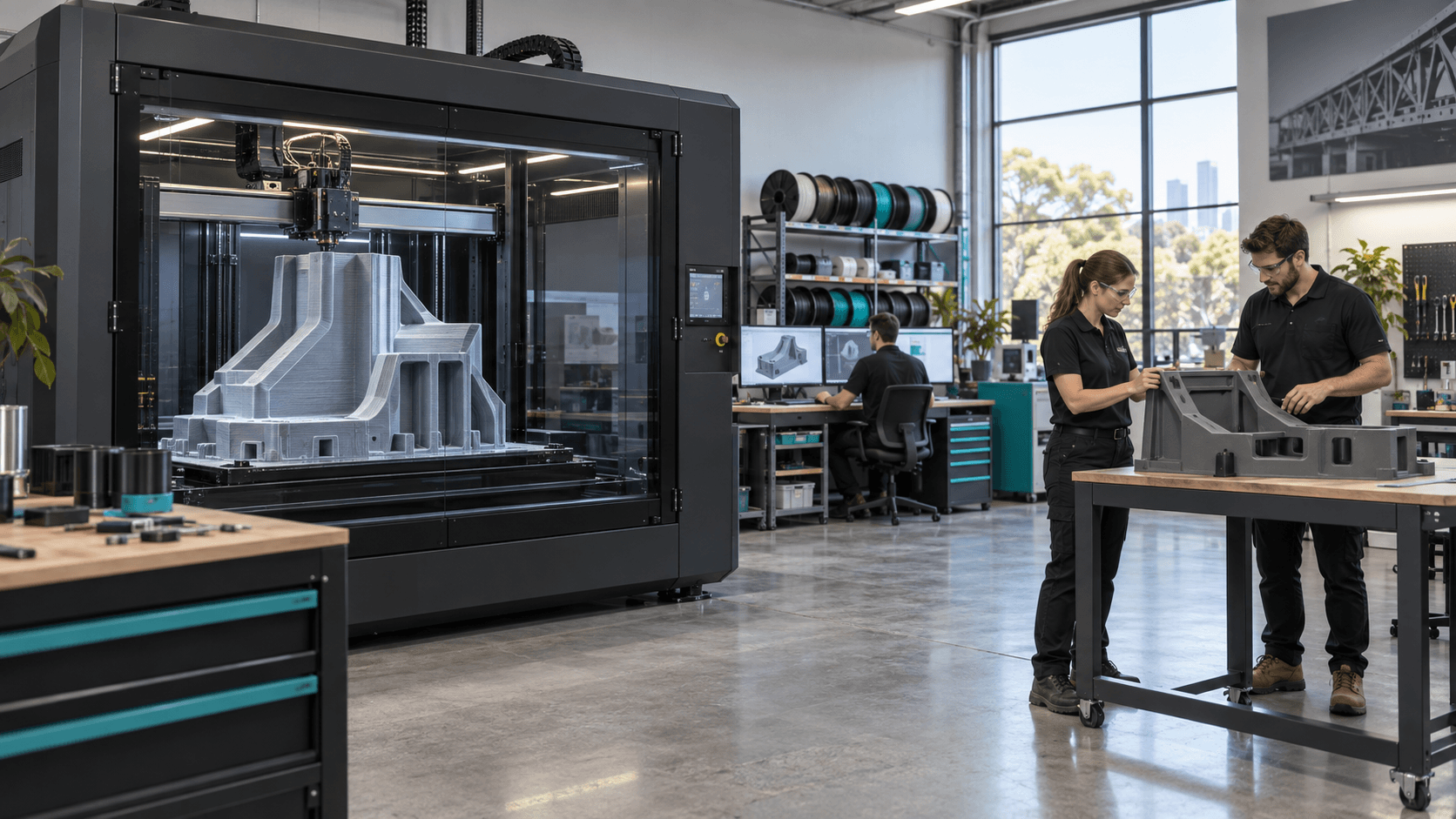
The work coming through our facility covers most of what ends up in frame.
Hero props are the close-up items, the ones that have to survive a 4K lens. We print those in resin at around 0.05mm — fine enough that paint and texture define the look rather than print lines.
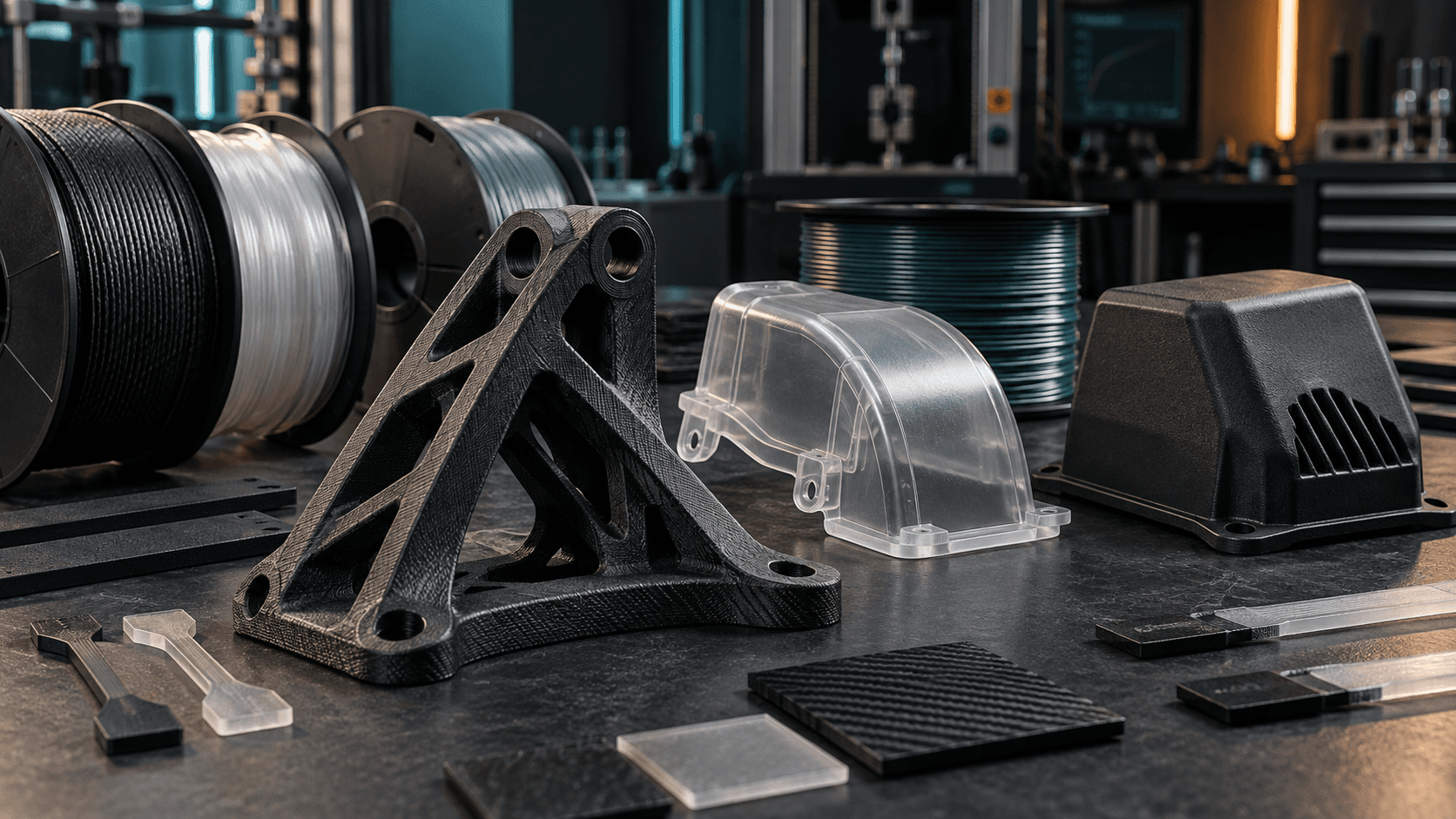
Stunt and action duplicates have a different job: survive whatever the stunt team does to them. They go through in engineering-grade FDM — PETG, ABS or Nylon depending on the hit they need to take — built for impact rather than a pretty surface.
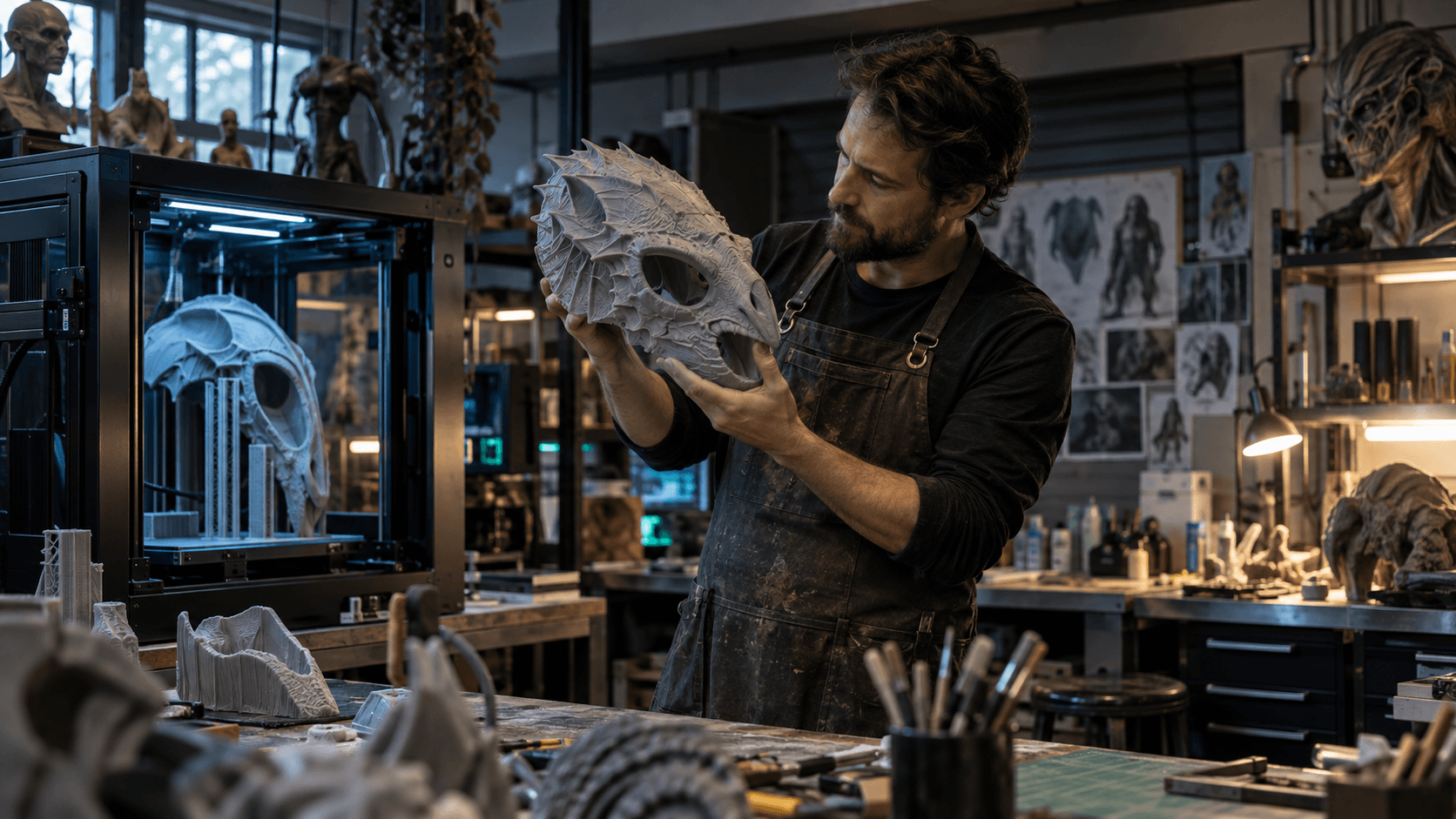
Costume and creature components sit in between. A creature panel has to be light enough for the performer wearing it all day, sharp enough for camera, and tough enough to last the shoot. Usually that means mixing technologies: resin where it shows, FDM for the structure underneath.
Then there's set dressing, which people tend to forget about. When a scene calls for fifty identical background objects, printing them is often cheaper and quicker than buying or building them the old way.
The NDA question
Confidentiality comes up in almost every first conversation, and fair enough. A script is worth money. An unreleased character design can't be sitting on some shared drive, can't turn up in a supplier's portfolio, and definitely can't be on a bench in view of anyone walking past.
We treat that as the default, not a premium add-on. Files arrive on secure channels, live in isolated storage, and get deleted when the job's done unless you ask us to keep them. We don't talk about client work in public without sign-off.
Turnaround is the real selling point
If we're honest, the thing clients value most isn't print quality — it's the clock. A production ringing us with a 48-hour window for a set of hero props isn't the exception; that's a normal week. The farm runs around the clock, so a job approved at 5pm can be on a machine by five past and finished before the next morning's call.
If you're shooting out of Sydney, we can also get parts to set when the schedule leaves no other option.
We work with your SFX team, not around it
P3DA isn't here to replace prop-makers and SFX artists. The finishing, the paint, the assembly that makes a printed part look like it belongs on screen — that's still skilled hands doing skilled work. What we hand over is the starting point: accurate, repeatable, and on time.
If you've got a production coming up, talk to us early. The sooner we're in the room, the more options stay open.
Need 3D Printing Services?
Get in touch for a free consultation and quote on your project.
Request a Quote