3D Printing vs Injection Moulding: How to Choose
We get this one from engineering clients all the time: when does it stop making sense to 3D print and start making sense to cut a mould? It's a fair question, but it's usually pointed the wrong way. The useful version is — what does each option actually cost me, all in, for the parts I'm making right now?
Where injection moulding earns its keep
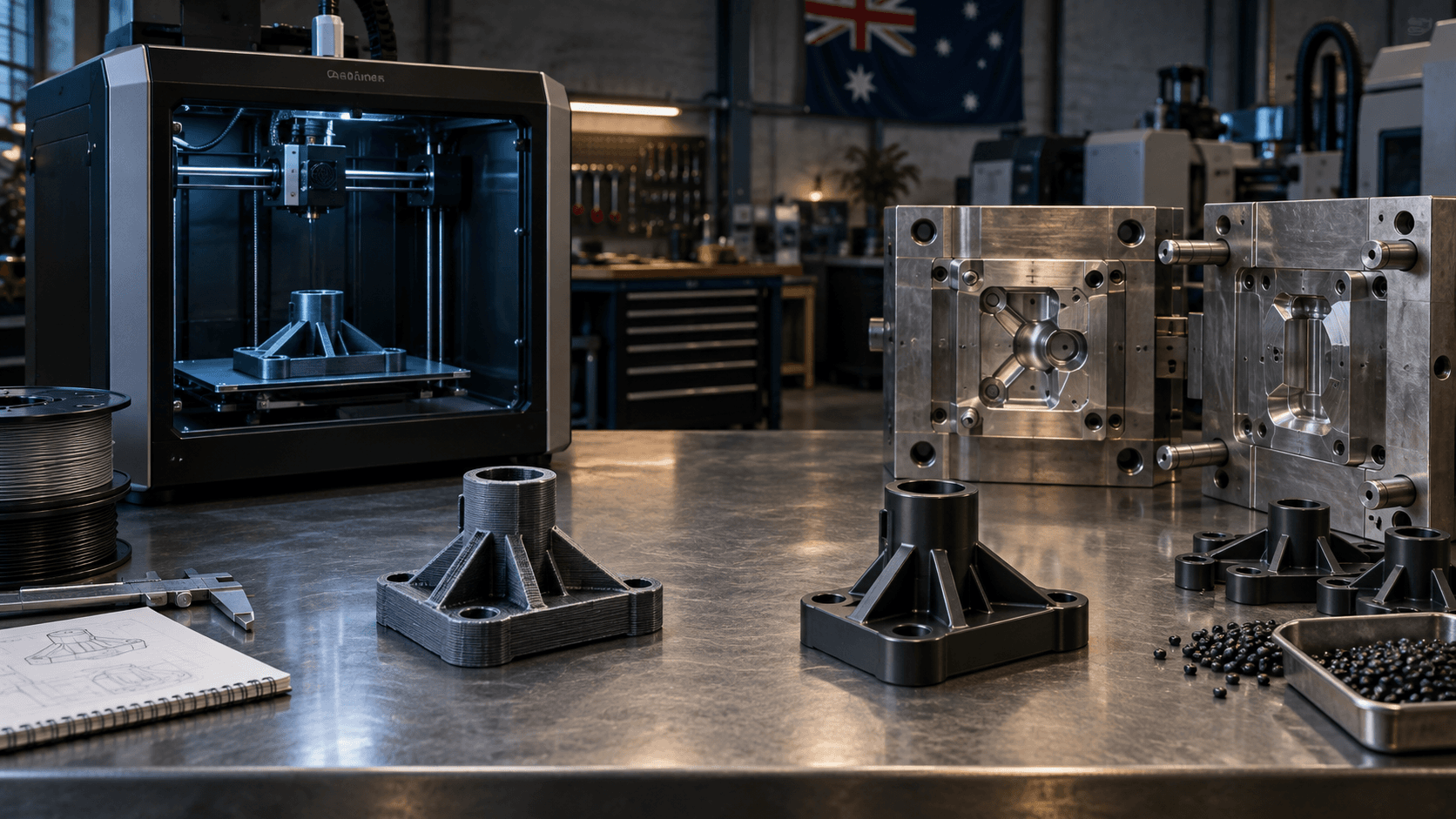
Past a certain volume, nothing beats moulding on price per part. Lock your design, order 10,000 of them, and a mould is almost certainly your answer. The parts are better, too: consistent density, no layer lines, a nicer finish straight off the tool.
The sting is up front. Tooling for even a simple mould runs into the tens of thousands and climbs fast with complexity. Expect six to twelve weeks before you see a part, longer for awkward geometry. And once that steel's cut, a design change hurts — sometimes it means a whole new tool.
Where printing comes out ahead
Below roughly 500 to 1,000 units, the per-part saving from moulding rarely pays back the tooling. Where exactly the lines cross depends on how complex the part is and what it's made from, but that's the ballpark.
While the design's still moving, printing lets you change your mind for free. A tweak that costs $150 to reprint can cost $15,000 to work into a mould.
Geometry matters too. Moulding comes with rules — draft angles, even wall thickness, side-actions for undercuts. Printing ignores most of them. Internal channels, lattices and organic shapes that would be a nightmare to mould come off a printer without much fuss.
And for the long tail of low-volume parts — jigs, fixtures, end-of-arm tooling, spares for machines nobody supports anymore — printing often isn't a stopgap at all. It's the permanent answer.
There's also the plain case of needing parts this week. When the deadline is days rather than months, long-run economics don't really enter into it.
Most clients end up doing both
Plenty of our industrial clients run a hybrid. They print through development and the first production runs, prove the design out, build up sales, then tool up for moulding once the numbers justify it. By that point the printing has already flushed out the design problems, so the moulding spend carries a lot less risk.
Some parts never graduate. A product might have an injection-moulded housing but keep printed brackets, mounts, or low-volume variants that would never earn their own tool.
Don't forget the material question
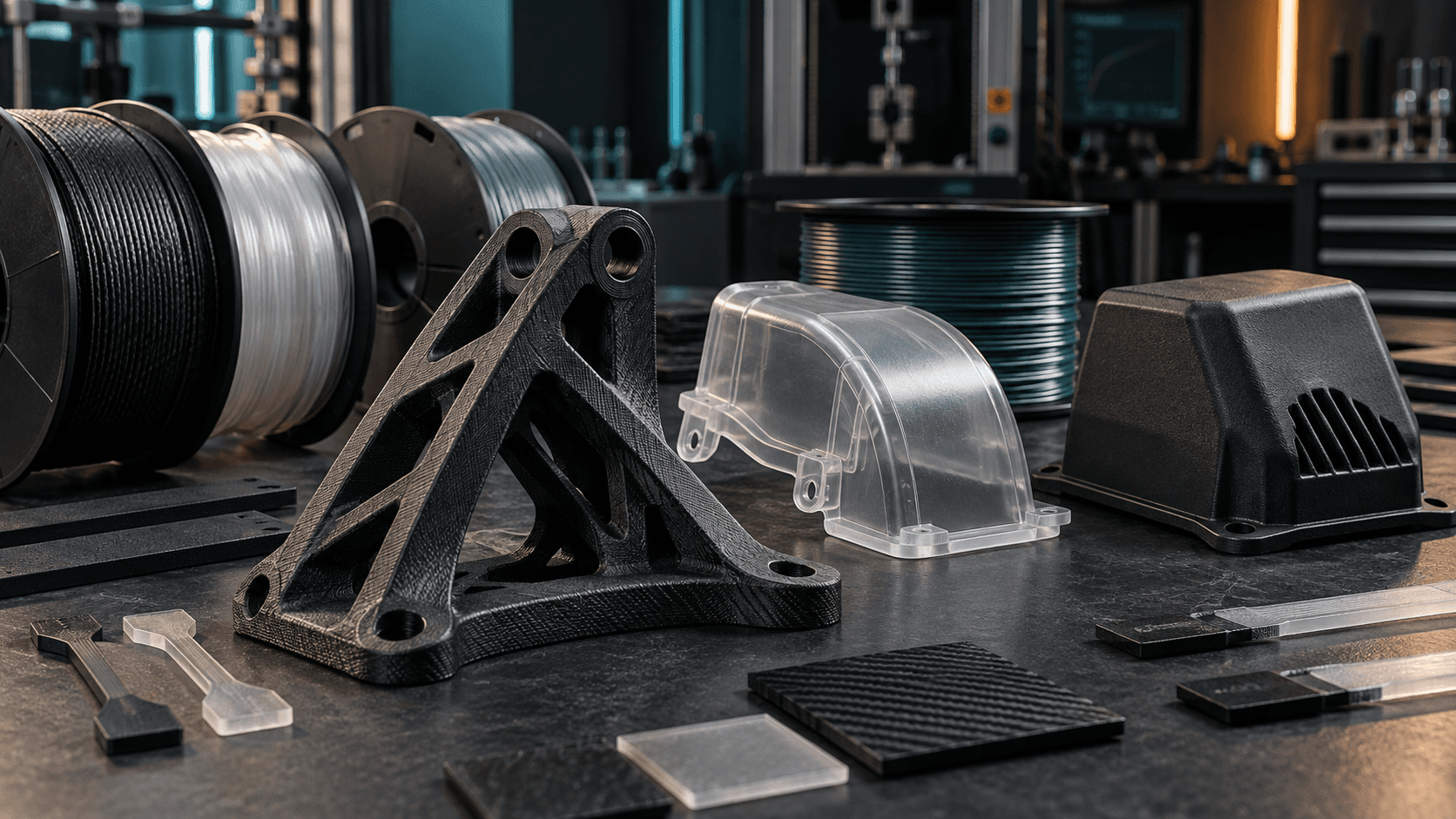
The material gap between the two has closed a lot. Engineering FDM filaments — PA12, PA6-CF, PC, ASA — now hit mechanical numbers that hold up in real end-use parts. If your part sees structural load, heat, chemicals or sun, the material you pick usually matters more than how it's made.
Not sure which side of the line you're on? Bring us the part and the spec. We'll tell you straight — including the times moulding is the smarter call.
Need 3D Printing Services?
Get in touch for a free consultation and quote on your project.
Request a Quote